Looking for Reliable Veterinary Anesthesia Equipment in Bangalore? Here’s Everything You Need to Know
The veterinary healthcare industry in Bangalore has rapidly evolved over the last decade. With growing pet ownership, increasing specialty veterinary hospitals, advanced animal surgeries, and higher expectations for patient care, veterinary anesthesia equipment has become one of the most critical investments for veterinary clinics and animal hospitals. Find veterinary anesthesia equipment supplier in Bangalore.
Whether performing routine sterilization procedures, orthopedic surgeries, dental treatments, emergency operations, or complex surgical interventions, veterinary anesthesia equipment ensures patient safety, proper anesthesia delivery, controlled respiration, and improved surgical outcomes.
If you are searching for a reliable veterinary anesthesia equipment supplier in Bangalore, this complete guide explains everything you should know before purchasing veterinary anesthesia systems, how these machines work, what features matter, maintenance requirements, consumables, service considerations, and how to choose a trusted supplier.
Why Veterinary Anesthesia Equipment is Important for Modern Veterinary Hospitals
Modern veterinary surgeries require precise anesthesia management.
Without proper anesthesia equipment, veterinary procedures may face:
- Poor anesthesia control
- Higher surgical risk
- Increased patient stress
- Reduced surgical efficiency
- Complications during surgery
- Poor recovery outcomes
This is why veterinary anesthesia equipment has become standard equipment in modern veterinary hospitals across Bangalore.
What is Veterinary Anesthesia Equipment?
Veterinary anesthesia equipment refers to specialized systems used to safely deliver anesthetic gases and oxygen to animals during surgical procedures and medical interventions.
The primary objective of veterinary anesthesia equipment is:
- Deliver oxygen safely
- Provide inhalation anesthesia
- Maintain controlled anesthesia depth
- Support respiration
- Enable safer surgeries
- Improve patient monitoring
These systems are used across:
- Veterinary hospitals
- Animal clinics
- Referral centers
- Emergency hospitals
- Specialty veterinary centers
- Educational institutions
- Research facilities
Types of Veterinary Anesthesia Equipment
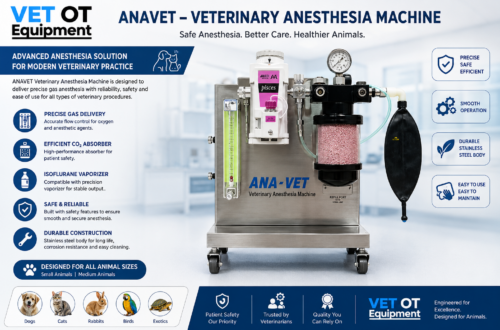
Veterinary Anesthesia Machine
Used to deliver anesthetic gases and oxygen.
Vaporizers
Used for converting anesthetic liquids into controlled vapor concentrations.
Breathing Circuits
Carry anesthetic gases between machine and patient.
Ventilator Systems
Provide respiratory support during surgery.
Monitoring Equipment
Used to monitor patient safety parameters.
Scavenging Systems
Remove waste anesthetic gases.
When is Veterinary Anesthesia Equipment Used?
Veterinary anesthesia equipment is used whenever procedures require controlled sedation or anesthesia.
Common Applications
Soft Tissue Surgery
Examples:
- Spaying
- Neutering
- Tumor removal
Orthopedic Procedures
Examples:
- Fracture repair
- Bone surgery
- Joint surgery
Dental Procedures
Examples:
- Tooth extraction
- Oral surgery
Emergency Procedures
Examples:
- Trauma surgery
- Emergency abdominal surgery
Diagnostic Procedures
Examples:
- Endoscopy
- Advanced imaging
- Painful examinations
Critical Care Procedures
Examples:
- Long surgeries
- Respiratory support
- Intensive monitoring
How Does Veterinary Anesthesia Equipment Operate?
Understanding machine operation is important before investing in veterinary anesthesia systems.
Step 1: Oxygen Source Connection
The machine connects to:
- Oxygen cylinders
- Central oxygen systems
Oxygen enters the machine through pressure regulators.
Step 2: Flowmeter Controls Oxygen Delivery
Flowmeters regulate oxygen quantity.
Doctors adjust flow based on:
- Species
- Body weight
- Age
- Health status
Step 3: Vaporizer Adds Anesthetic Agent
Common anesthetic agents:
- Isoflurane
- Sevoflurane
The vaporizer converts liquid anesthetic into controlled vapor.
Step 4: Breathing Circuit Delivers Gas
Gas mixture reaches patient through:
- Endotracheal tubes
- Masks
Step 5: Carbon Dioxide Removal
CO2 absorbers remove exhaled carbon dioxide.
Step 6: Waste Gas Removal
Scavenging systems remove excess anesthetic gases.
Major Components of Veterinary Anesthesia Equipment
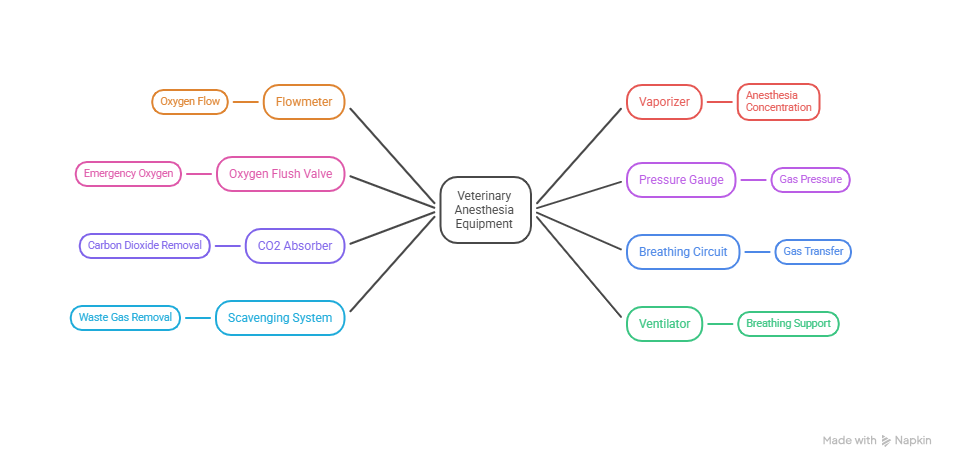
Features a Veterinary Anesthesia Equipment Must Have
Selecting the right veterinary anesthesia equipment requires evaluating important features.
1. Accurate Flow Control
Precise oxygen delivery improves safety.
2. High Quality Vaporizer
A reliable vaporizer ensures:
- Stable anesthesia depth
- Accurate gas concentration
3. Oxygen Failure Protection
Critical safety feature.
4. Emergency Oxygen Flush
Provides immediate oxygen during emergencies.
5. Easy Maintenance Design
Reduces downtime.
6. High Build Quality
Durability matters for daily use.
7. Compatibility with Monitoring Systems
Supports better patient management.
8. Multiple Animal Compatibility
Equipment should support:
- Dogs
- Cats
- Rabbits
- Exotic animals
9. Leak Resistant Design
Gas leaks create serious safety risks.
10. Service Support Availability
Critical for long-term reliability.
Critical Indicators Veterinary Doctors Must Monitor During Anesthesia
Monitoring during anesthesia is essential.
Oxygen Saturation (SpO2)
Indicates oxygen levels.
Normal values should remain stable.
Heart Rate
Abnormal heart rate may indicate complications.
Respiration Rate
Shows breathing adequacy.
Blood Pressure
Low blood pressure can be dangerous.
Temperature
Animals may become hypothermic during surgery.
End-Tidal CO2
Important for ventilation monitoring.
Mucous Membrane Color
Provides quick circulation assessment.
Anesthetic Depth
Too much or too little anesthesia creates risks.
Veterinary Anesthesia Consumables & Refilling Items
Veterinary anesthesia equipment requires periodic consumable replacement.
Oxygen Cylinders
Require refilling.
Isoflurane
Common anesthetic agent.
Requires periodic replenishment.
Sevoflurane
Premium anesthetic option.
Soda Lime
Used inside CO2 absorber.
Requires replacement.
Breathing Circuits
Wear over time.
Tubing Sets
Periodic replacement required.
Filters
Need regular changes.
Masks & Patient Interfaces
Must be inspected frequently.
Veterinary Anesthesia Equipment Maintenance Cycle
Regular maintenance improves safety and equipment lifespan.
Daily Maintenance
- Inspect circuits
- Verify oxygen supply
- Check vaporizers
- Visual leak inspection
Weekly Maintenance
- Leak testing
- Clean components
- Pressure verification
Monthly Maintenance
- Replace worn parts
- Inspect tubing
- Clean breathing circuits
Quarterly Maintenance
- Safety inspections
- Calibration checks
Annual Maintenance
Professional servicing recommended.
Includes:
- Calibration
- Vaporizer testing
- Pressure testing
- Component replacement
Common Problems Caused by Poor Maintenance
Improper maintenance can cause:
- Gas leakage
- Inaccurate anesthesia
- Increased surgery risk
- Equipment failure
- Higher operating cost
Preventive maintenance is significantly cheaper than emergency repairs.
How to Choose a Trusted Veterinary Anesthesia Equipment Supplier in Bangalore
Choosing the correct supplier is equally important as selecting the equipment.
Look for Industry Experience
Experienced suppliers understand veterinary requirements.
Verify Service Support
Ask:
- Who provides servicing?
- Are spare parts available?
- How quickly can support be provided?
Installation Assistance
Suppliers should assist with:
- Setup
- Training
- Demonstration
Product Range
A supplier offering complete OT solutions usually provides better support.
Customer References
Ask for:
- Existing installations
- Customer feedback
Warranty Support
Always verify warranty coverage.
Why Service Support Matters More Than Price
Many buyers focus only on price. Get veterinary anesthesia equipment supplier in Bangalore
However poor service leads to:
- Longer downtime
- Surgery cancellations
- Equipment failures
- Higher repair costs
Reliable after-sales support should be a priority.
Why Veterinary Hospitals in Bangalore are Upgrading Anesthesia Systems
Bangalore veterinary hospitals are increasingly investing in advanced anesthesia systems because of:
- Growing pet population
- More advanced surgeries
- Higher safety expectations
- Better critical care facilities
- Increased specialty hospitals
Modern veterinary hospitals require modern anesthesia systems. Get veterinary anesthesia equipment supplier in Bangalore
Why Choose VET OT Equipments for Veterinary Anesthesia Equipment?
VET OT Equipments Official Website provides advanced veterinary anesthesia equipment solutions for veterinary hospitals and clinics. You will get if you are searching on google for veterinary anesthesia equipment supplier in Bangalore.
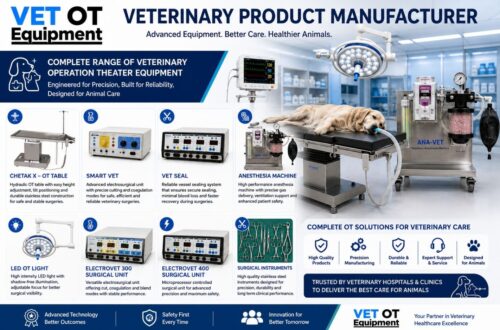
Product Solutions Include
- Veterinary anesthesia machines
- Vaporizers
- Veterinary OT equipment
- Patient monitoring systems
- Veterinary OT tables
- Veterinary LED surgical lights
- Veterinary vessel sealers
- Complete veterinary OT setup solutions
Areas Served
VET OT Equipments provides support across:
- Bangalore – Get veterinary anesthesia equipment supplier in Bangalore
- Chennai
- Hyderabad
- Mumbai
- Pune
- Pondicherry
- Coimbatore
- Tiruchirappalli (Trichy)
- Thrissur
- Kozhikode
- Malappuram
- Thiruvananthapuram
- Kannur
- Delhi
Why Customers Choose VET OT Equipments
- Reliable equipment
- Professional support
- Installation assistance
- Service support
- Training assistance
- Long-term spare availability
- Easy to locate veterinary anesthesia equipment supplier in Bangalore
Conclusion
Veterinary anesthesia equipment is one of the most important investments for modern veterinary hospitals and clinics. Proper anesthesia systems improve patient safety, surgical efficiency, anesthesia control, and post-operative outcomes. It is easy to find trusted veterinary anesthesia equipment supplier in Bangalore
Whether you operate a small animal clinic, referral hospital, emergency center, or specialty surgical practice in Bangalore, investing in reliable veterinary anesthesia equipment and choosing a trusted supplier significantly improves long-term success.
Equipment quality, service support, consumables availability, maintenance, and professional guidance should all be considered before purchasing veterinary anesthesia systems.
For veterinary anesthesia equipment, complete veterinary OT setup solutions, installation support, and professional assistance, contact Vet OT Equipments.
Frequently Asked Questions
What is veterinary anesthesia equipment used for?
Veterinary anesthesia equipment delivers oxygen and anesthetic gases during surgical procedures.
Which anesthetic gases are commonly used?
Most commonly:
- Isoflurane
- Sevoflurane
How often should anesthesia equipment be serviced?
Routine inspections daily and professional servicing annually are recommended. Ask for service to VET OT Equipment if you are searching for veterinary anesthesia equipment supplier in Bangalore.
What consumables require replacement?
Common consumables include:
- Isoflurane
- Oxygen
- Soda lime
- Circuits
- Tubing
- Filters
Why is monitoring important during anesthesia?
Monitoring helps detect complications early and improves patient safety.
Where can I buy veterinary anesthesia equipment in Bangalore?
VET OT Equipments provides veterinary anesthesia equipment solutions, service support, installation assistance, and complete veterinary OT setup solutions across India. If you are looking for service in Bangalore then just search on google veterinary anesthesia equipment supplier in Bangalore.